For most Amazon and e-commerce sellers, the “Supplier Profile” is the last thing you see before committing to a production run. It’s also where the biggest sourcing mistakes happen.
While these companies present themselves as industrial giants on B2B marketplaces, 90% of them are shell entities or trading brokers with no actual manufacturing capacity. Before you pull the trigger on that wire transfer, you need to look past the marketing photos and check these four forensic red flags in their registry data.
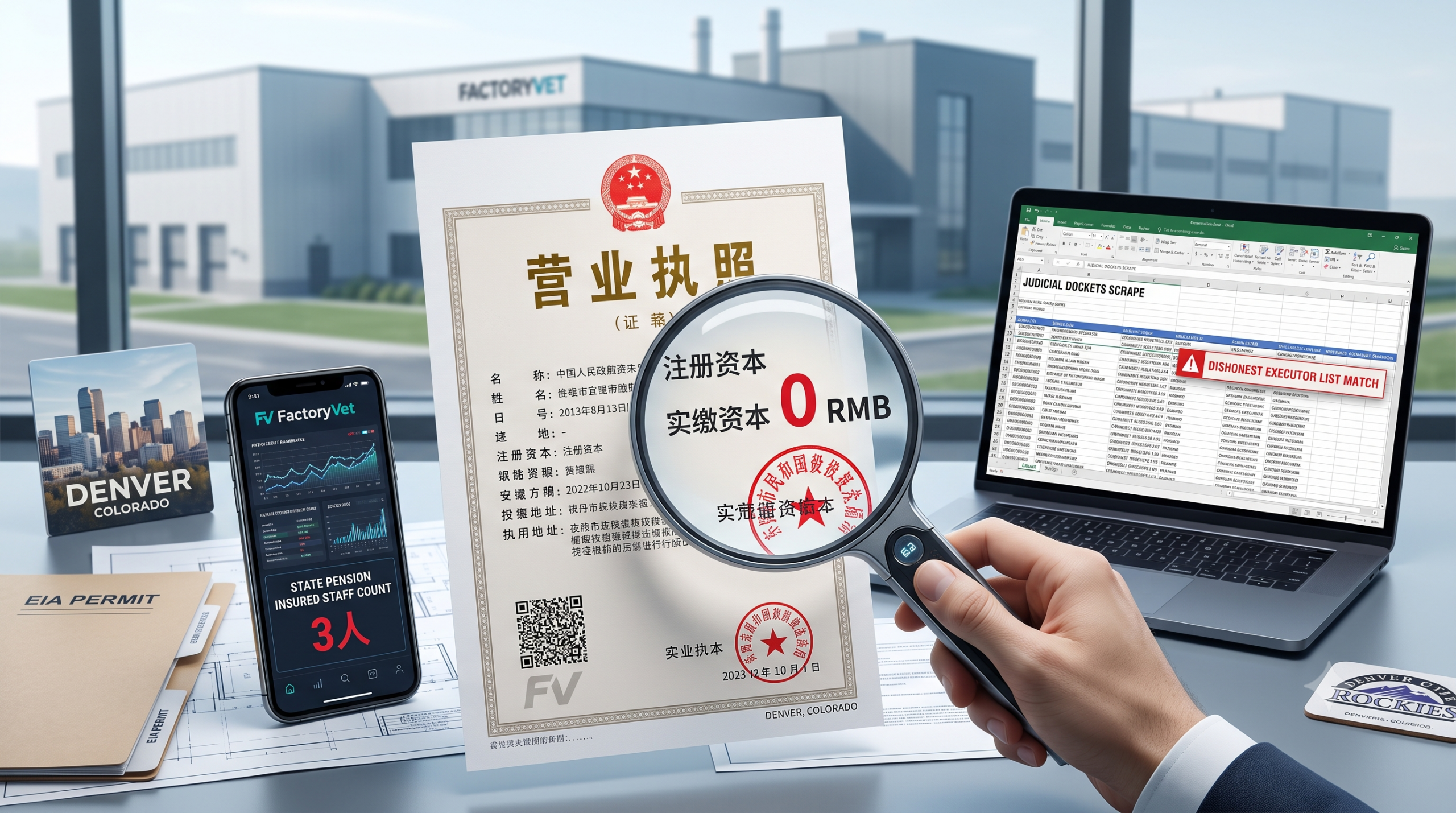
1. The “Registered Capital” Illusion vs. Paid-In Cash
Most buyers check the “Registered Capital” on a business license. If it says 50,000,000 RMB, they assume a massive factory.
The Risk: Registered capital is often just a paper promise—a commitment to pay over 30 years. It costs literally zero cash upfront to incorporate a company with a 50 million RMB commitment on paper. Always check the Paid-In Capital (实缴资本). If the paid-in amount is “Not Disclosed” or 0 RMB, you aren’t dealing with a capitalized manufacturer; you are likely dealing with a paper entity.
2. The “Ghost Workforce” Lie
A supplier claims they have 200 factory workers, but their official government state pension filings show only 3 insured employees.
The Risk: This is a dead giveaway for a trading company. Legitimate manufacturers are legally required to contribute to state pension and social insurance funds for their permanent staff. If the pension numbers don’t match the labor claims, they are either using temporary, low-skill labor, or—more likely—they have no factory floor at all. They are paying for a sales office, not an assembly line.
3. EIA Tonnage Limits Don’t Match Your Order
Real manufacturing creates an environmental footprint—chemical waste, power usage, and emissions. To do this legally, a factory must hold an Environmental Impact Assessment (EIA) clearance from the local government.
Why it matters: If you order 500,000 units, but their EIA clearance only approves 50 tons of processing per year, they physically cannot manufacture your order in-house. When they lie about capacity, they are secretly subcontracting your goods to unverified, third-tier “black workshops” that have zero safety or quality control.
4. The “Dishonest Executor” Blacklist
A supplier can have an “Active” business license and still be a total disaster legally.
The Risk: You need to check the government’s official blacklist for defaulting debtors (Dishonest Executors). If the owner or the corporate entity is on this list, their bank accounts are usually frozen, and they are legally prohibited from making international payments. Sending money to an entity on this list is like throwing your capital into a black hole; you will likely never see the goods or your money again.
The Bottom Line
A business registration is more than just a paper license; it is a legal snapshot of the company you are about to go into business with. If these four forensic markers don’t align, it’s time for a deep-dive audit.
Don’t wire money on a gut feeling. Use the FactoryVet Registry Search to triangulate the factory’s legal standing, litigation history, and verified capital before you pay. A small investment in data now could save you a six-figure disaster later.